Webmaster • July 19, 2025

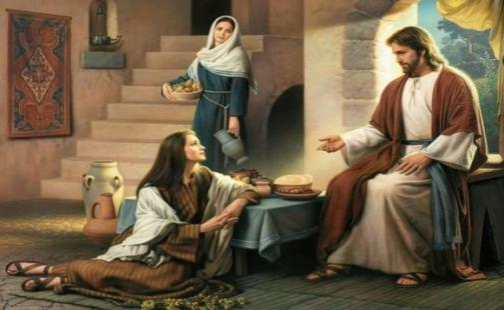
The story of Jesus in the home of Martha and Mary complements the story of the Good Samaritan, which immediately precedes it in Luke's Gospel. Both stories are unique to Luke. The story of the Samaritan opens with the words “a certain man.” Today's reading opens with the words “a certain woman.” The Samaritan is an example of how a disciple should see and act. Mary is an example of how a disciple should listen. Mary, a woman, is a marginalized person in society, like the Samaritan. Both do what is not expected of them. As a woman, Mary would be expected, like Martha, to prepare hospitality for a guest. Here again Jesus breaks with the social conventions of his time. Just as a Samaritan would not be a model for neighbourliness, so a woman would not sit with the men around the feet of a teacher. Both stories exemplify how a disciple is to fulfil the dual command which begins chapter 10, love of God (Mary) and love of neighbour (the Samaritan). These are the two essentials of life in the kingdom. By using the examples of a Samaritan and a woman, however, Jesus is saying something more. Social codes and boundaries were strict in Jesus' time. Yet to love God with all one's heart and one's neighbour requires breaking those rules. The Kingdom of God is a society without distinctions and boundaries between its members. It is a society that requires times for seeing and doing and times for listening and learning at the feet of a teacher.


By Webmaster December 5, 2025
The Franciscan Sisters of the Renewal are hosting a live nativity at Corpus Christi church, Neville Road Saturday 20th December , 2pm including real animals, party afterwards refreshments, activities for children, Fr Christmas coming with gifts, Carol singing. All welcome.
By Webmaster December 5, 2025
The next Healing Service will be on 10th December 2025 at 7pm in St Mary’s RC Church, Horsforth. This is a beautiful opportunity to pray for healing for yourself or others, whether physical, psychological, or spiritual. Remember Jesus is alive, and miracles can and do happen! Everyone is welcome, including non-Catholics and those of no faith - all that is needed is an openness to Jesus. If you would like to know more, please contact Fr. Michael Doody or ask Gill Atkinson.
By Webmaster December 5, 2025
Suzy fund would like to wish all Parishioners a peaceful and happy Christmas. Thank you for all your donations throughout the year. If you would like to give an extra donation over Christmas, please place in an envelope in the Suzy Collection box/ parish office with your name and we will send out New Year greetings
By Webmaster December 5, 2025
Due to the unfortunate cancellation of our Annual Christmas Fayre, we are offering a smaller alternative next weekend after our 10am Mass on Sunday 14th December . Thank you for all your donations making this possible. Stalls to include tombolas, cakes, toys, books, haberdashery, and various gifts. Mulled wine will also be available from the bar. Our annual Christmas raffle will be drawn at this event. All Welcome! Please invite family and friends. We look forward to seeing you there.
By Webmaster December 5, 2025
Please take a note of our mass times for Christmas.
By Webmaster December 5, 2025
In this week's Gospel, Matthew describes the work and preaching of John the Baptist. John the Baptist appears in the tradition of the great prophets of Israel, preaching repentance and reform to the people. The description of John found in this reading is reminiscent of the description of the prophet Elijah (2 Kings 1:8). John directs a particularly pointed call to repentance to the Pharisees and Sadducees. John marks the conversion of those who seek him out with a baptism of repentance. Other groups in this period are thought to have practiced ritual washings for similar purposes, and John's baptism may have been related to the practices of the Essenes, a Jewish sect of the first century. John's baptism can be understood as an anticipation of Christian baptism. In this passage, John himself alludes to the difference between his baptism and the one yet to come: “I am baptizing you with water, for repentance . . . He will baptize you with the Holy Spirit and fire.” (Matthew 3:11). In this reading, John makes very clear that his relationship to the Messiah yet to come (Jesus) is one of service and subservience: “. . . the one who is coming after me is mightier than I. I am not worthy to carry his sandals” (Matthew 3:11). In the context of Matthew's Gospel, today's passage is followed by Jesus' baptism by John, an event that is attested to in all four of the Gospels and appears to have been the start of Jesus' public ministry. As John's message prepared the way for Jesus in the first century, we, too, are called to prepare ourselves for Jesus' coming. We respond to John's message by our repentance and reform of our lives. We are also called to be prophets of Christ, who announce by our lives, as John did, the coming of the Lord.
By Webmaster December 1, 2025
‘Our Christmas Fayre unfortunately has been cancelled - We will provide further updates within the newsletter over the coming weekend about alternative arrangements. We apologise for any inconvenience caused’.
By Webmaster November 8, 2025
: Time for prayers, questions, input from a priest and social time. There are two groups meeting simultaneously; under 18s and over 18s. Fridays 6.30pm-8.15pm: 19th September (Hinsley Hall), 17th October (Hinsley Hall), 14th November (Cathedral Hall), 19th December (Hinsley Hall). Under 18 participants must complete and return a permission form prior to attending. For permission forms and to notify of attendance (all participants) please contact Vocations Promoter, Fr Simon Lodge simon.lodge@dioceseofleeds.org.uk .
By Webmaster November 8, 2025
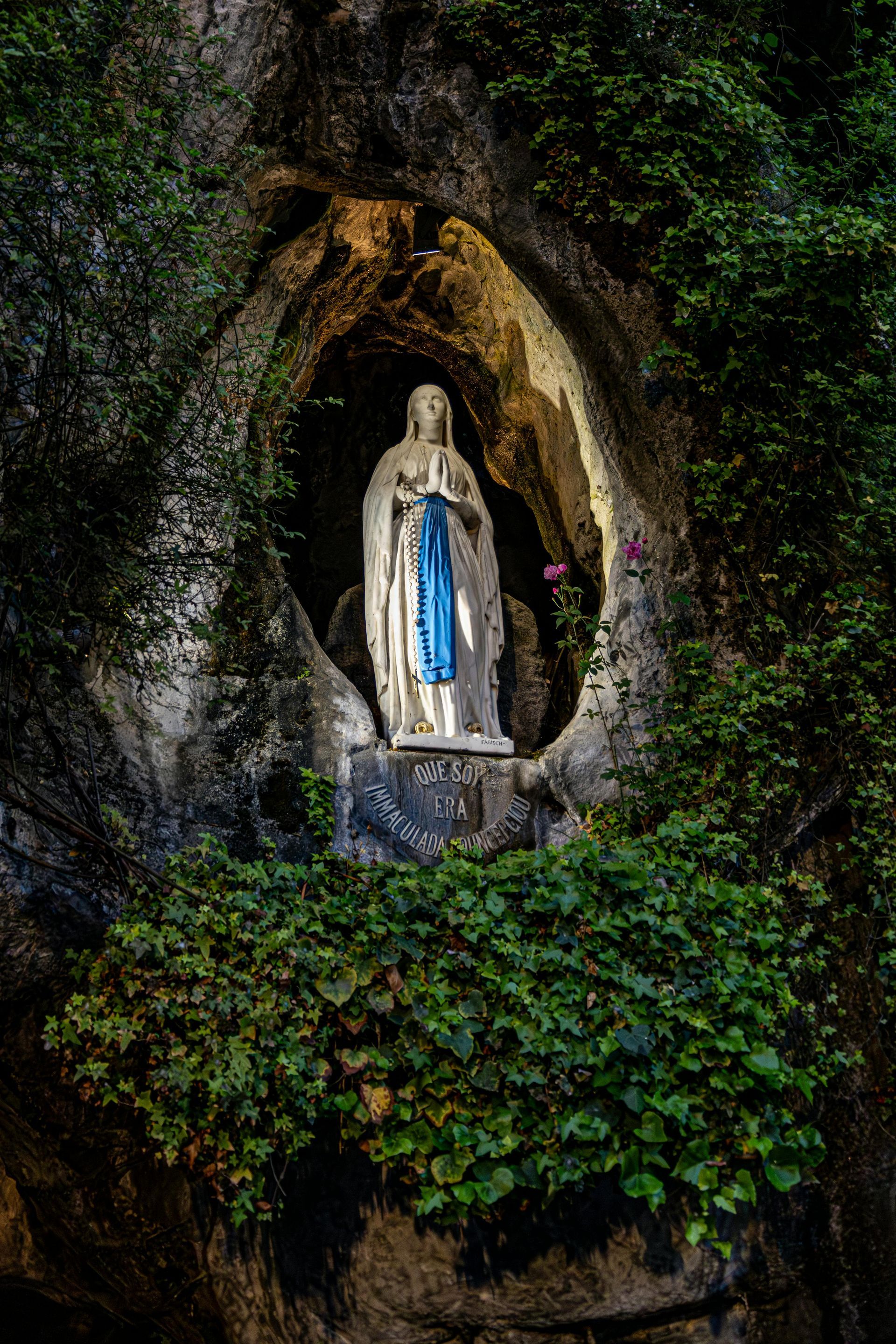
Ever thought of going on the Diocesan pilgrimage to Lourdes volunteering as a nurse or as part of the hospitality team but want to know more, then you are invited to an information evening about the roles and pilgrimage. Hinsley Hall, Monday 1st December, 7pm . For more information, please email Phil Marshall on lourdes.enquires@dioceseofleeds.org.uk or 07766 148375.  To register interest please email recruitment.lourdes@dioceseofleeds.org.uk , or simply turn up on the evening.
By Webmaster November 8, 2025
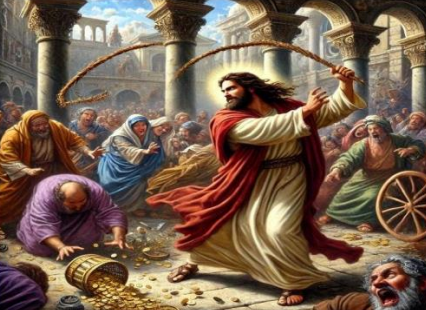
The story of the cleansing of the Temple is found in all four Gospels. In Matthew, Mark, and Luke, Jesus is upset with the deceitful practices of the vendors and expels them for that reason. But in John, Jesus' authority is contrasted with the authority of the Temple cult and is a criticism of the cult itself. The story is composed of two parts, Jesus' action in the Temple and Jesus' predictions about the Temple's destruction. If the many pilgrims to Jerusalem during Passover were to have animals for the sacrificial rituals of the feast, it was necessary to sell cattle in the Temple and to change the unclean Roman money. By denouncing this, Jesus is cutting to the core of the Temple cult. The story is really about Jesus' fate, revealing that Jesus, not the Temple, is the locus of God's presence on earth. As they often do in John, the Jews misunderstand Jesus' words. This gives John the chance to explicitly state his point. Although this is the beginning of his ministry, Jesus is already speaking of his coming death and Resurrection. The statement that concludes this passage uses the fact of the Resurrection to prove the point of Jesus' words. Believers need to remember the words and actions of Jesus and claim them as affirmations of the truths of their faith. Christians sometimes point to Jesus' anger in this passage as a way to point out Jesus' humanity. But this would miss the powerful point of the entire Gospel, that the Word became flesh. The point is not that Jesus' anger proves he is human. It is that a human being, in his words and actions, can claim the authority of God.
More Posts